How to hire abroad without an entity
Employ people in a new country through an employer of record, before you have a company there.
For a company that wants one or a few employees in a new country, to test the market or serve customers there, before it is ready to form a company of its own.
On this page: In short
In short
In short
To hire abroad without an entity, most companies use an employer of record: a firm already registered in the country that employs your worker, signs the contract, runs payroll and handles local compliance, while you direct the work1,2. Check first that the country allows the model for your role, compare providers on contracts, intellectual property and termination costs, and keep the worker away from signing contracts for you, which can create a taxable presence whoever the employer is3,4.
The route in Promote:Global
Local hire via EOR · People-led
Commitment
Control
Risk
Rated 1 to 5, as the iPhone app rates every route when you choose one. The ratings are general, for the route itself: your own commitment, control and risk depend on your market, your product and your partners. Grows into: wholly-owned subsidiary.
When it fits
Is hiring through an employer of record the right route?
A good fit when
- You want one to a handful of people in a country for a test period, and forming a company would take longer than the test. Law firms describe the model as a short-to-medium-term tool2.
- The person must be a real employee, with benefits, statutory protections and social security, not a contractor.
- The country permits the model, and the worker will have real autonomy rather than sit fully inside your management line4.
A poor fit when
- The country regulates employee leasing tightly and the worker would be integrated into your teams: law-firm commentary names Germany, Spain, Italy and France, and Switzerland bars leasing staff in from an employer abroad4,5.
- Headcount is growing. Costs can overtake running your own company, and one law firm gives about ten employees as an example point to review the choice2.
- The person will sign contracts or lead sales for you, which can create a permanent establishment whoever employs them1,3.
The people involved
Who’s involved and how they work together
- Your company to Employer of record: Service fee and salary cost
- Employer of record to Your hire: Contract, payroll, benefits
- Your company to Your hire: Daily tasks and direction
- Your hire to Your company: The work itself
Step by step
How to hire abroad without an entity, in 9 steps.
Each step says how companies do it, with sources, then what Promote:Global does there, or that the step is yours to do.
Discover
Step 1: Define the role, the term and the budget
Write down what the person will do, who directs the work, whether they will negotiate or sign contracts for you, and how long you need them. The same facts decide both the employment-law question and the tax question: a person who habitually concludes contracts for a company can create a permanent establishment for it3. Set the budget and a review date before you start.
What this step produces
- A one-page role brief
- A budget and a review date
Common mistake: Describing a sales or managerial role as support, to keep the paperwork simple.
You do this step yourself
The brief, the budget and the review date are yours to set. The plan opens with Define the role to test the market and Set the budget, success criteria & review date, which you tick when they are done.
Prepare
Step 2: Check that the country allows the model
Some countries regulate employee leasing, and an employer of record can fall inside those rules. In Germany, lending employees to another company needs a federal permit6, and the agency-work law, as amended for 2017, limits the placement of the same worker with the same client to 18 months, with exceptions under collective agreements7. Whether that reaches an employer of record has been tested by few courts: the Federal Employment Agency flagged risks in the model in October 2024 and later revised its guidance8, and law-firm commentary says regulators in Germany, Spain, Italy and France may treat it as leasing where the worker is integrated into the client’s operations4.
Elsewhere the limits are firmer. A 2018 law-firm note says Switzerland does not allow staff to be leased into the country from an employer abroad5, and Mexico’s 2021 reform banned the subcontracting of personnel, allowing only registered providers of specialized services outside the client’s core business9. Rules change, so take local advice for your role.
What this step produces
- A country note from local counsel
Common mistake: Assuming that because a provider offers a country, the model is lawful there for your role4.
With Promote:Global
The plan puts Confirm local employment-law basics after the offer, so add this check as a step before Compare EOR providers (see Make the plan fit this route, below) and use the legal step’s Find an advisor for this market button now. It opens advisory firms with experience of the market. It is not legal advice, and the answer comes from the firm you choose.
Prepare
Step 3: Choose an employer of record, a contractor or your own company
Through an employer of record, the worker is the provider’s employee. A contractor is self-employed, and many countries judge that status on the facts of the relationship, such as control, integration and exclusivity, not on the label in the contract1,3. Your own company gives full control, but takes time and money to set up. Make this choice once the country check is back: where the model is restricted for your role, one of the other two is the answer.
What this step produces
- A short decision memo
Common mistake: Signing a contractor agreement with someone who works full time under your instructions1,3.
With Promote:Global
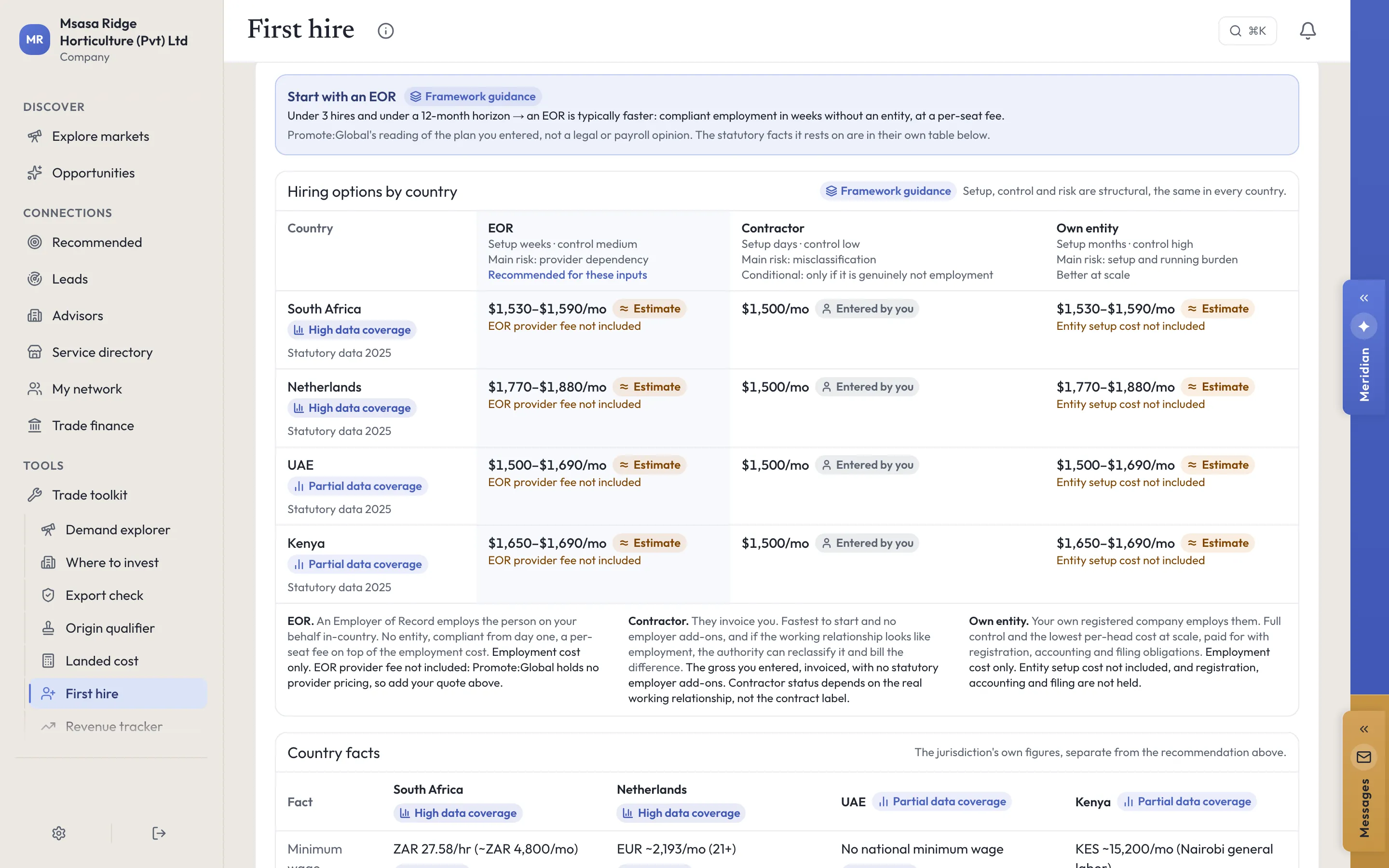
First hire compares hiring through an employer of record, as a contractor or through your own company, in up to four countries: the minimum wage with its year, an estimated employer cost, notice and leave rules, and a recommendation. It is free, says where it has no data, and is orientation, not payroll, tax or legal advice.
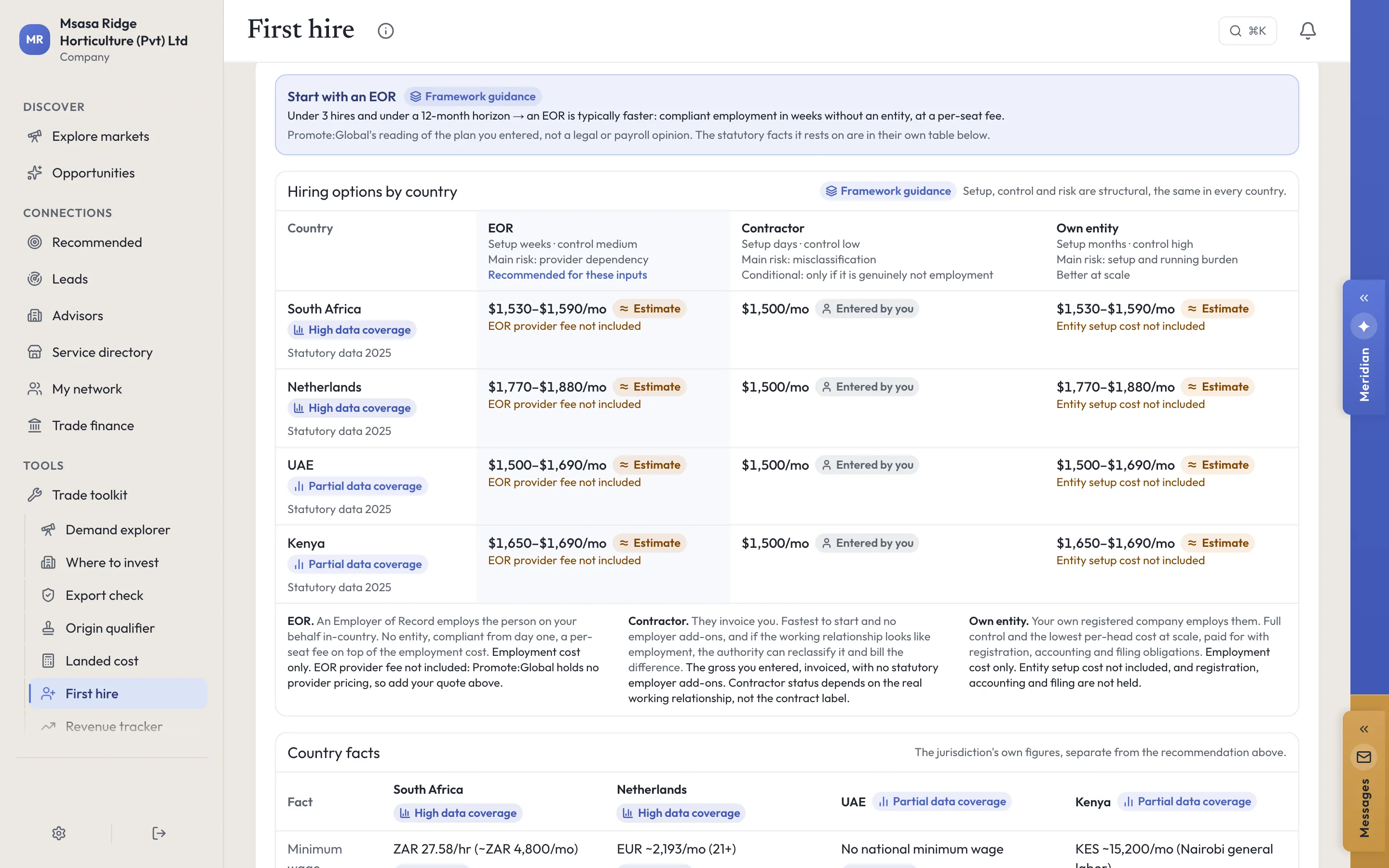
First hire on the web, comparing an employer of record, a contractor and your own company. Click or tap to see the whole screen. Connect
Step 4: Compare providers and negotiate the contract
Ask each provider which local entity will employ the worker, and for evidence of any permit or registration the country requires, such as Germany’s federal permit or Mexico’s register of specialized-service providers6,9. Read the local employment contract it will use, and ask who bears notice, severance and termination costs: one law firm notes that the client usually does2.
Get written quotes from several providers on the same items, listed under What to budget for below, so you compare the whole cost and not the monthly fee alone. No neutral benchmark of fee levels exists2.
What this step produces
- Written quotes from several providers
- The service agreement, with an indemnity
Common mistake: Choosing on the monthly fee alone, without asking who pays when the employment ends.
With Promote:Global
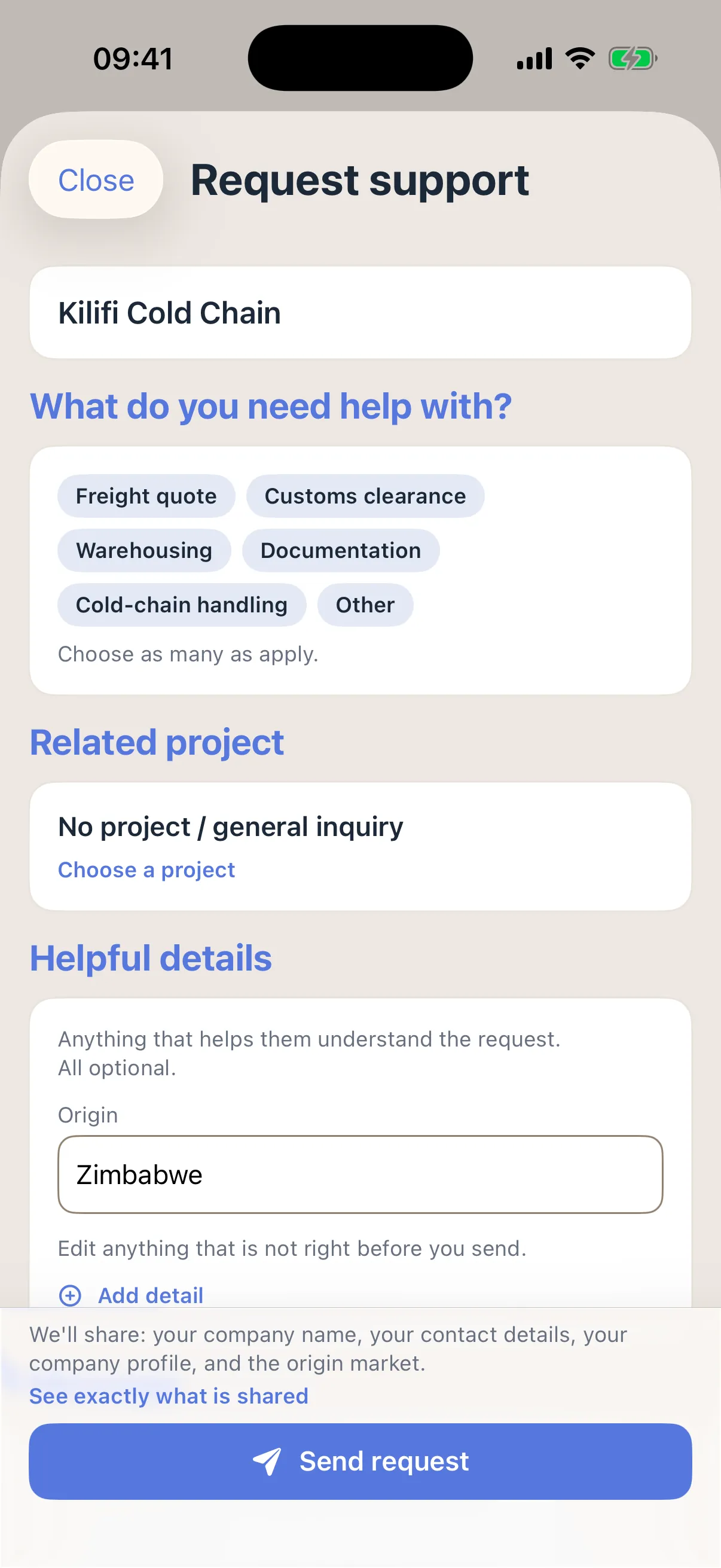
The plan’s Compare EOR providers and Check coverage, fees & IP/data terms steps carry Find service providers, where firms list themselves under employer of record, and payroll and benefits. On the project, Search for possible partners looks on the open web for Employer-of-Record providers and staffing firms, for 1 AI action, and each result is a lead to check. A request to a firm carries your company’s contact card, shown before you send it. Promote:Global holds no EOR prices and does not check providers; on the web, First hire takes a quote you were given.
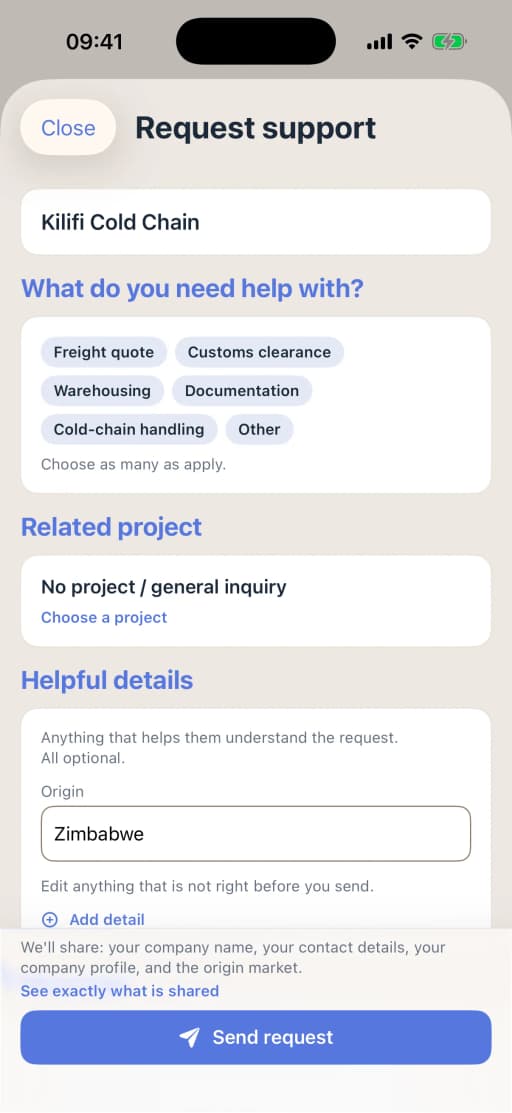
A request to a listed firm on iPhone, showing what it will share. Prepare
Step 5: Settle intellectual property and staff data in writing
The provider is the employer, so what the worker creates may belong to it unless the contracts assign it to you: put an assignment from the worker and the provider in writing1,2. Add a data processing agreement for the employee data the provider holds, and agree who bears which costs if something goes wrong2.
What this step produces
- An intellectual property assignment
- A data processing agreement
Common mistake: Leaving the intellectual property with the provider as the employer1,2.
With Promote:Global
The plan’s Set up staff data protection step carries Find an advisor for this market. Promote:Global drafts no agreements: the advisor or your own counsel does.
Connect
Step 6: Write the job, benchmark the pay and make the offer
You supply the job description and the pay. The provider issues an employment contract that meets the local minimums on notice, working time, leave, pay and benefits, and runs payroll, tax and social security from the first month1,2. Check the offer against the local minimum wage and the employer’s statutory costs before it goes out.
What this step produces
- A job description
- The signed employment contract
- An onboarding checklist
Common mistake: Copying home-country terms that fall below the local minimums.
With Promote:Global
The plan’s Write the job spec & benchmark local pay and Make the offer through the EOR steps carry Find service providers, with recruitment and HR firms for the search. First hire shows each country’s minimum wage with its year and an estimated employer cost. Promote:Global does not recruit or run payroll.
Grow
Step 7: Manage the work, and keep the provider the real employer
You assign the work; the provider handles payroll, tax and legal notices. Unless a tax advisor has reviewed the role, do not give the worker authority to conclude contracts in your name or to act as your regular local representative. Under Article 5 of the OECD Model Tax Convention, a person who habitually concludes contracts for a company, or plays the principal role in concluding them, can create a permanent establishment for it3, and in 2025 the OECD clarified when a worker’s home can count as a place of business10. An employer of record does not remove that risk on its own1,2.
For the worker’s income tax, the OECD commentary on Article 15 lists signs of who really employs someone: who instructs them, controls the place of work, provides the tools, can select and dismiss, and sets holidays, and whether the provider’s fee simply passes on the worker’s costs3. Keep a short file showing the provider carries real employer responsibilities.
What this step produces
- A permanent-establishment checklist, reviewed by a tax advisor
- A short employer-factors file
Common mistake: Believing the employer of record takes away all permanent-establishment risk1,2.
You do this step yourself
Day-to-day management is yours, and the tax review is your advisor’s. Promote:Global runs no payroll and gives no tax advice.
Grow
Step 8: Decide when to move to your own company
Set the triggers in advance: headcount, revenue, a need to sign contracts or hold licenses, and the fees you pay. One law firm gives about ten employees as an example point to review the choice, and suggests three to six months for the move, including the rules on transferring staff and keeping their continuity of service2.
What this step produces
- A trigger list
- A transition plan
Common mistake: Staying with the provider until a tax authority or a labor inspector forces the decision.
With Promote:Global
The plan ends with Run a 90-day review and Decide the EOR → own-entity threshold. When the time comes, a new project on the Wholly-owned subsidiary route gets its own setup checklist, from Shortlist locations to Set a compliance & reporting cadence.
Grow
Step 9: Transfer or end the employment cleanly
Agree at the start who bears notice and severance, and how the worker moves to your own company once it exists, with their years of service recognized where the law requires it2.
What this step produces
- A transfer or termination letter
Common mistake: Ending the contract and rehiring the person without local advice.
You do this step yourself
The provider and your counsel handle the transfer or the termination. Promote:Global drafts no letters and gives no employment advice.
Your plan in Promote:Global
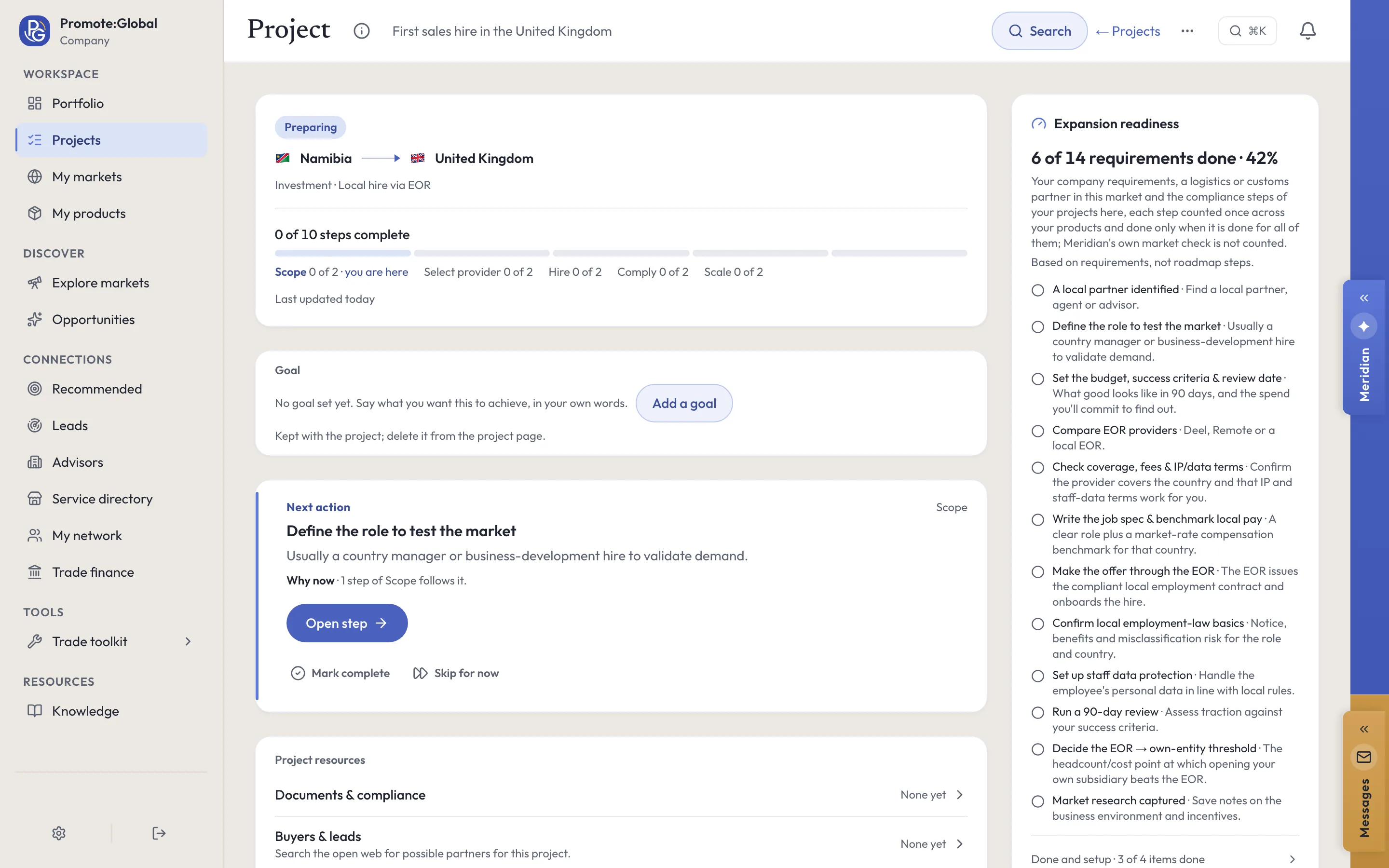
What a local hire via EOR project looks like.
Create a project, choose “Local hire via EOR” under “How are you entering?”, and Promote:Global writes this plan for your product and market. The route is in the list on the web and on iPhone. You tick steps off, skip one for now or add your own.
Scope
- Define the role to test the market
- Set the budget, success criteria & review date
Select provider
- Compare EOR providersButton: Find service providers
- Check coverage, fees & IP/data termsButton: Find service providers
Hire
- Write the job spec & benchmark local payButton: Find service providers
- Make the offer through the EORButton: Find service providers
Comply
- Confirm local employment-law basicsButton: Find an advisor for this market
- Set up staff data protectionButton: Find an advisor for this market
Scale
- Run a 90-day review
- Decide the EOR → own-entity threshold
The plan is the route’s own checklist, with no customs steps by default. Where the work moves goods across a border, such as equipment, ingredients, samples or branded supplies, add those steps yourself. You can add, reorder and skip steps. In your own project, each step names your product and your countries. Building the plan uses no AI action.
On a project, Search for possible partners looks on the open web for Employer-of-Record providers and staffing firms, or for whoever you describe, ranked by fit, for 1 AI action. A result is a lead to check before you contact anyone, not a confirmed partner.
Make the plan fit this route
The plan for this route is its own checklist, from defining the role to deciding when to move to your own company, and it places “Confirm local employment-law basics” after “Make the offer through the EOR”. Add the check that the model is allowed for your role before you compare providers, so it shapes the choice and the offer, and use the plan’s own legal step to check the provider’s contract against the local minimums.
- Confirm the employer-of-record model is allowed for this role (in Scope, after “Set the budget, success criteria & review date”)
- Choose between an employer of record, a contractor and your own company (next, before “Compare EOR providers”)
- Review the role for permanent-establishment risk with a tax advisor (in Comply, after “Set up staff data protection”)
- Agree how the employment transfers or ends (last, after “Decide the EOR → own-entity threshold”)
On the project, type a step into Add a step under the roadmap, or ask Meridian to propose them: a step Meridian proposes is added only when you accept its card.
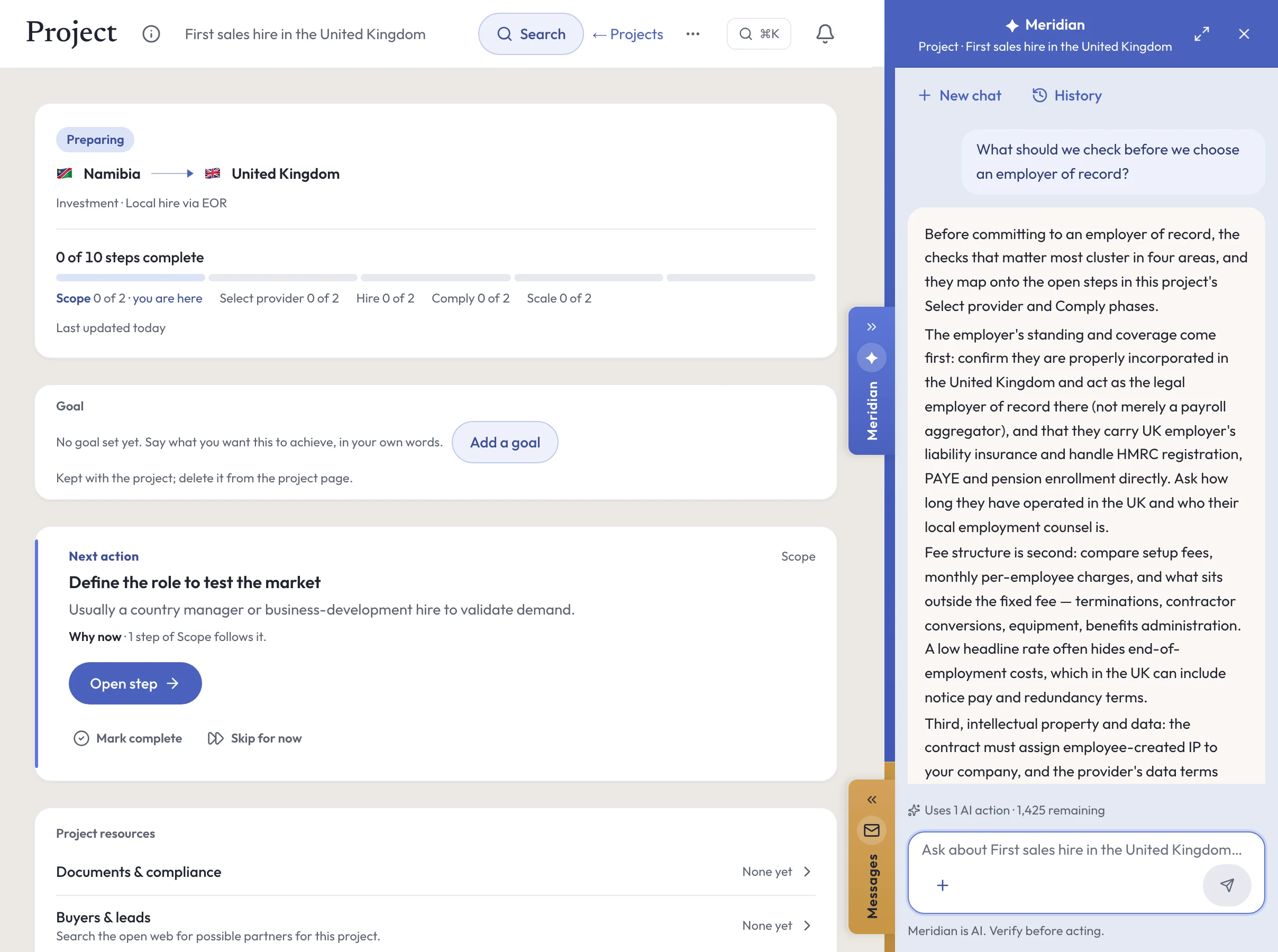
Meridian
Meridian, on your local hire via EOR project.
Meridian, the built-in AI assistant on the web and on iPhone, reads the project you have open: its route, its countries, the steps still open and your notes. It answers questions about them, and it proposes changes as cards. Nothing changes on the project until you accept a card. Ask it to search for possible partners and it runs the project’s search in the conversation, looking on the open web for Employer-of-Record providers and staffing firms, for 1 AI action; every result is a lead to check.
Ask
- What’s the next step on this project?
- What’s blocking this project?
- What should we check before we choose an employer of record?
Do
Add a step — to this plan, as a card you accept
Save a note — to the project
Set entry method — one of the eighteen routes, with its reason, if another fits you better
Every plan carries a monthly allowance of AI actions, and each question uses 1. Building the plan uses none, and neither do First hire. Meridian is AI. Verify before acting.
Documents
The paperwork.
- Service agreement with the provider
- Scope, fees, indemnities, intellectual property, data protection, and who bears termination costs2.
- Local employment contract
- Between the provider and the worker, meeting the country’s minimum terms1.
- Intellectual property assignment
- From the worker and the provider to your company2.
- Data processing agreement
- For the employee data the provider holds2.
- Role brief and permanent-establishment assessment
- What the person does, who directs them, and whether they conclude contracts3.
- Provider’s permit or registration
- Where leasing rules apply, such as Germany’s federal permit or Mexico’s specialized-services register6,9.
- Transition plan and transfer letters
- For the move to your own company2.
Costs and timelines
What to budget for.
Get quotes for
- The full employment cost
- The gross salary, the employer’s social security, and the benefits, leave and notice terms the local contract must meet1,2. It moves with the country, the salary and anything you add above the minimum. Compare it first, before the fees.
- The provider’s fee
- Usually a percentage of the salary, plus charges for setup, terminations and currency conversion; no neutral source gives a level2. Ask what it covers: some providers pass the cost of day-to-day legal advice through to you2.
- A deposit or advance payment
- Ask whether the provider holds one, how it is worked out, and when and how it comes back when the employment ends.
- Exit costs
- Notice, severance and the provider’s termination charge. The client usually bears them, and one law firm warns that leaving a country through a provider tends to cost more than through your own company2. They move with length of service and the country’s rules.
What sets the timing
- The country check and a read of the provider’s contract, both before an offer goes out.
- The candidate’s notice period at their current employer.
- Where agency-work law reaches the model, a limit on how long the same worker can be placed with you: 18 months in Germany, with exceptions under collective agreements7.
- Moving to your own company: one law firm advises at least three to six months of lead time2.
Ask for each quote in writing, for your product, market and volumes. Prices and timings differ by country, provider and year.
Mistakes and best practices
What goes wrong, and what works.
Common mistakes
Best practices
- Keep the contract, the tax position and the role description consistent with how the work really happens.
- Keep one file for each hire, with the country note, the provider’s contract, the intellectual property assignment and the tax review, so a later move to your own company starts from records.
Questions
Questions people ask.
What is an employer of record?
A company that becomes the legal employer of a worker in a country where you have no entity. It handles the contract, payroll, tax and compliance, while you direct the work1,2.
What is the difference between an employer of record and a PEO?
A professional employer organization usually shares employer duties, in a co-employment model, with a company that already has a local entity. An employer of record is the sole legal employer, for companies that have none. The terms are used loosely, so ask which model a provider offers2.
Does an employer of record avoid permanent establishment risk?
Not on its own: what the person does for you decides it, whoever the formal employer is1,2,3.
Is an employer of record legal in Germany?
It depends on the structure and the role. Lending workers needs a federal permit, and few courts have tested how the agency-work rules reach the model, so take local advice6,8.
When should I switch from an employer of record to my own company?
When headcount grows, when workers need to sign contracts or manage others, or when the fees outweigh running a company of your own2.
Sources
Where this guide comes from.
- [1]Employers of record · Ius Laboris, alliance of employment law firms, 2025
- [2]Working without borders: what every business needs to know about employer of record · Mishcon de Reya, law firm, 2026
- [3]Model Tax Convention on Income and on Capital: condensed version · OECD, 2017
- [4]Worklife 2.0: employers of record, part 3, employee leasing · Freshfields, law firm, 2023
- [5]Understanding Swiss labour leasing laws · Fragomen, law firm, 2018
- [6]Arbeitnehmerüberlassung (agency work) · Bundesagentur für Arbeit, the German Federal Employment Agency
- [7]New restrictions for temporary agency work in Germany in 2017 · Orrick, law firm, 2016
- [8]Employer of Record model: new technical directive · McDermott Will & Emery, law firm, 2025
- [9]Mexico has reformed its outsourcing and subcontracting rules · Ius Laboris, alliance of employment law firms (via Mondaq), 2021
- [10]The 2025 Update to the OECD Model Tax Convention · OECD, 2025
Reviewed October 26, 2026. This guide is general information about how companies do this, written in our own words from the sources above; it is not legal, tax or financial advice. Rules differ by country and change, so check them with the authority or an advisor before you act. What it says Promote:Global does is what the product does today. The screens on this page come from our demo workspace, and the companies in them are invented.
Read next
Related guides.
The next rung up
How to set up a subsidiary abroadWholly-owned subsidiary · Investment / FDI
- How to build a remote team abroad
Remote / distributed team · People-led
- How to send employees abroad
Secondment · People-led
- How to make a greenfield investment abroad
Greenfield investment · Investment / FDI
All eighteen guides Promote:Global for international expansion Plans and prices
Start your local hire via EOR project.
Sign up, add what you sell, then create a project and choose “Local hire via EOR” under “How are you entering?”. The plan above is written for your product and market.
Start this projectFree to start. No credit card needed. See plans and prices